
Teller - AI Writing Assistant
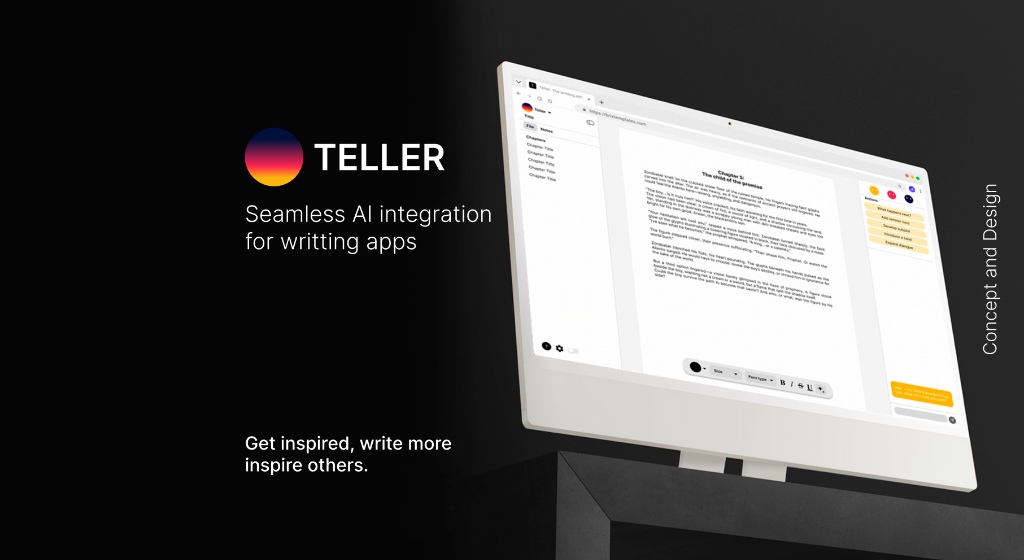
Get inspired, write more, inspire others. A cross-platform AI writing assistant that empowers storytellers to craft better narratives.
Role
UX Designer
Duration
4 Weeks
Tools
Figma + AI
Type
Case Study
1. Project Overview
Bridging creativity and structure. Generative AI is reshaping how we write, yet many writing platforms still rely on outdated tools. I saw an opportunity: what if writers could access professional-grade AI assistance directly within their favorite communities?
Teller is a speculative case study exploring how AI can integrate seamlessly into platforms like Wattpad, WebNovel, and Royal Road—transforming their text editors into intelligent creative companions that help writers refine plots, develop characters, and elevate their craft.
⚠️ The Problem
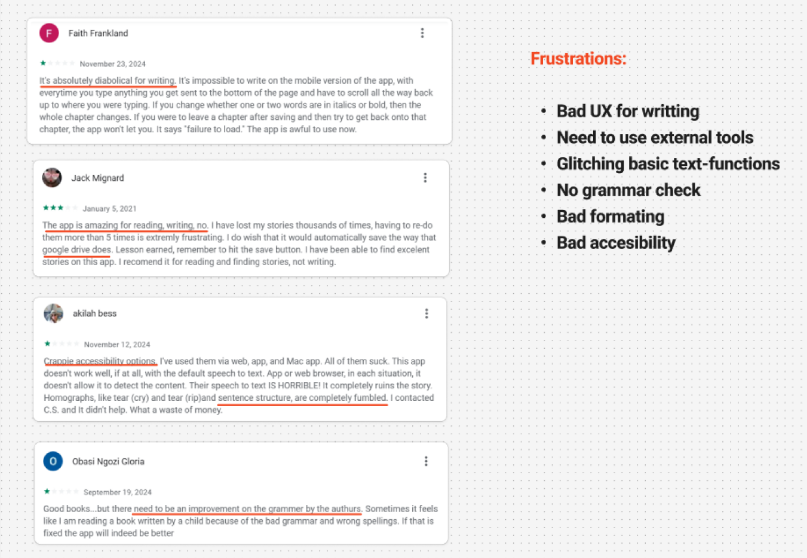
What's broken in today's writing experience?
Writing communities attract millions of passionate storytellers, but they're held back by fragmented workflows:
- Basic text processors lack essential features for storytelling (plot tracking, pacing analysis, character consistency)
- Subscription plans don't deliver comprehensive editing tools or AI-powered feedback
- Writers juggle multiple services just to get basic manuscript support
The result? Writers spend more time managing tools than actually writing.
✓ The Solution
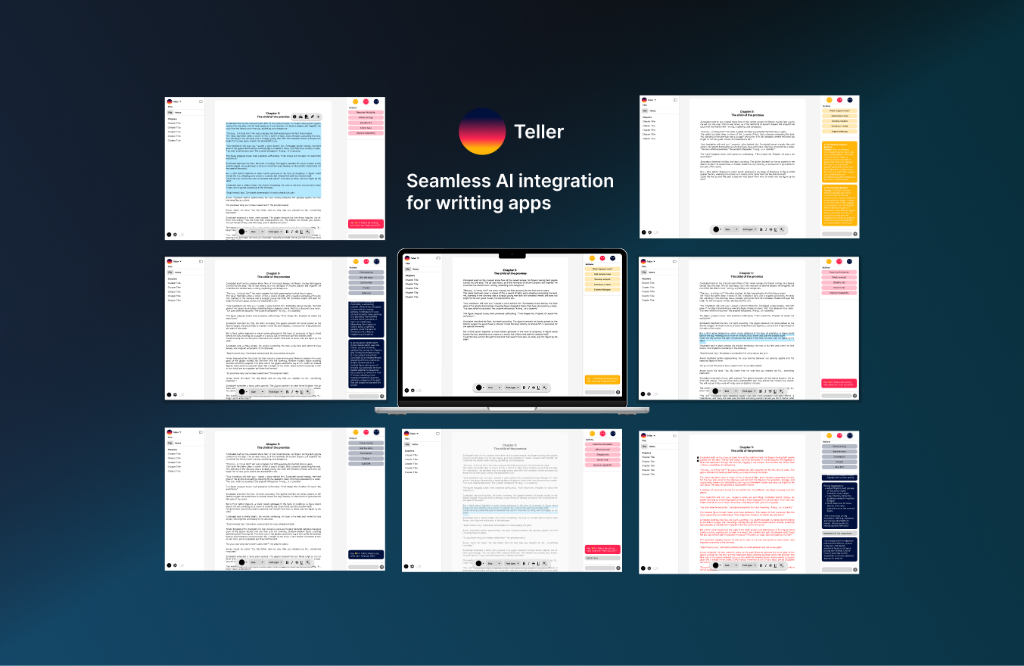
AI-powered storytelling, directly where writers create. Teller leverages generative AI to provide:
Plot structure, pacing, character arcs
Character details, timeline tracking
Story arc visualization
No switching between tools
2. My Process
3. Defining the Scope
Why focus on writing communities?
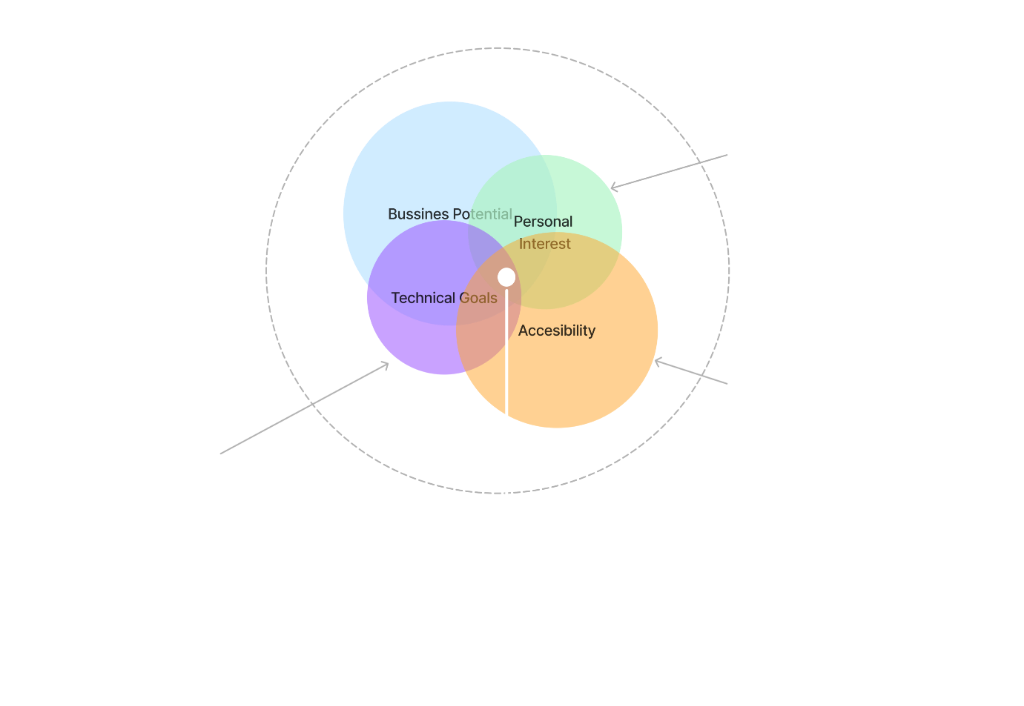
I started with an open canvas—too many possibilities. But I knew my passion: storytelling. As someone who writes and constantly switches between tools, I asked: What if AI could bridge creativity and structure?
The sweet spot emerged at the intersection of my interests (writing + AI), market demand (millions of writers), and a clear gap (platforms lack advanced tools).
4. Understanding the Current Experience
UX Audit
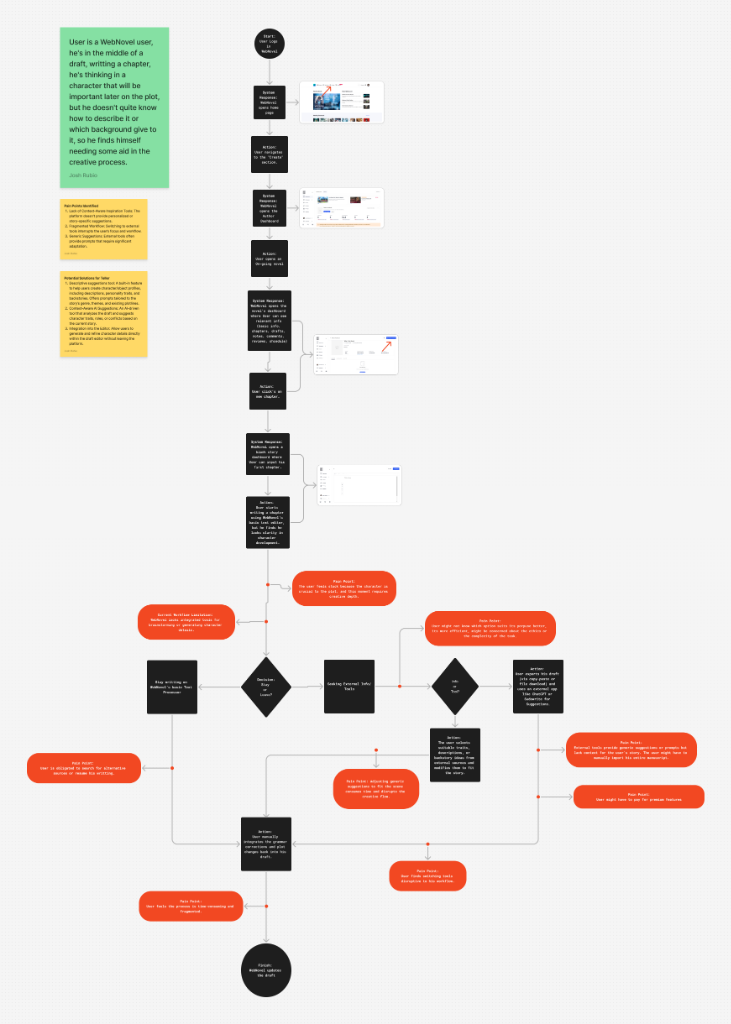
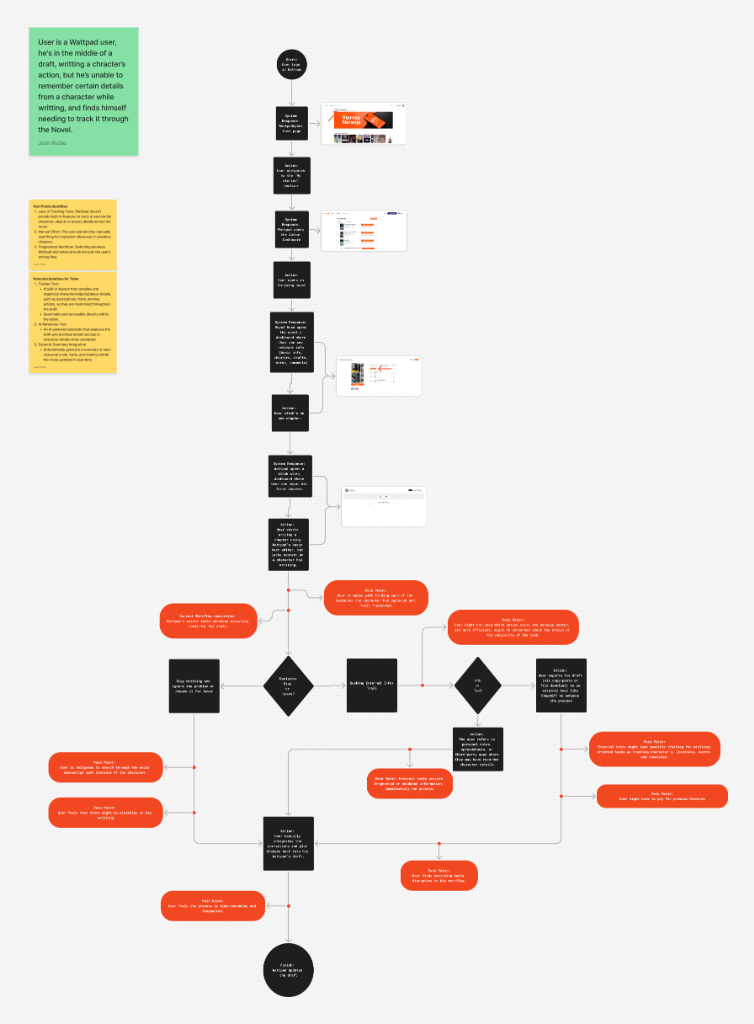
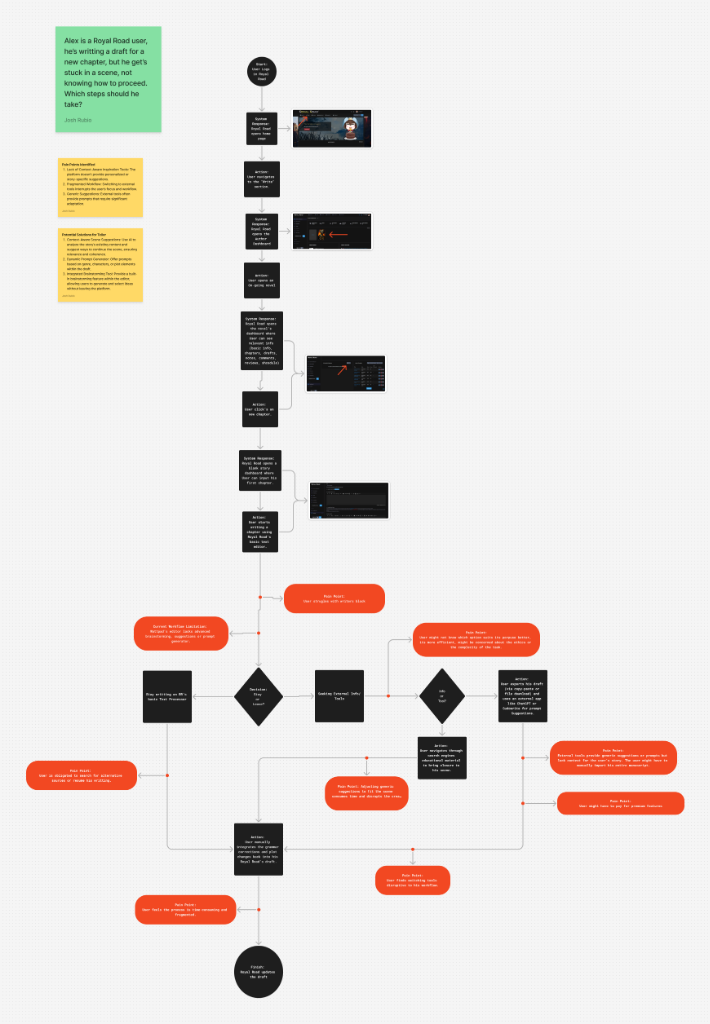
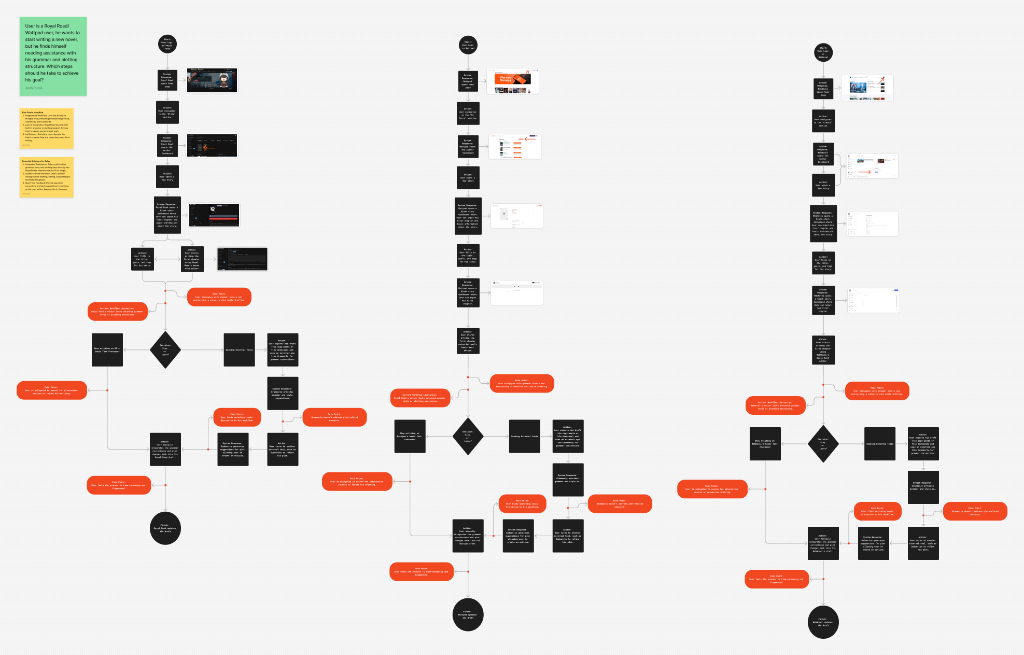
I analyzed the top writing communities to understand their workflows. Through user journey mapping, I identified critical pain points and opportunities where Teller could add value.
5. Deep Research
To validate Teller's market fit, I investigated existing tools, analyzed workflows, and created data-informed personas.
🎯 Research Goals
- Map current workflows through user journeys and personas
- Analyze the competitive landscape to find gaps and opportunities
- Define clear user needs based on real behavior and pain points
Competitive Audit
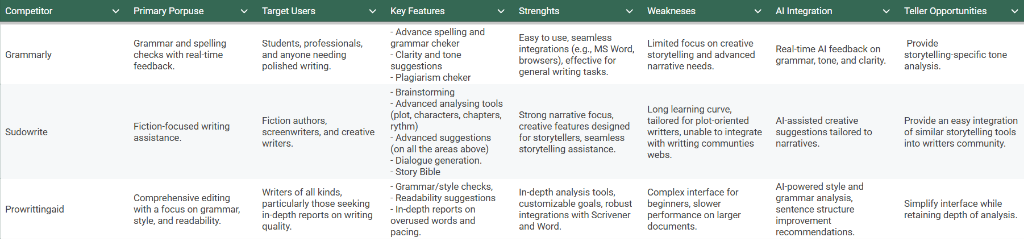
I researched tools writers already use—Grammarly, Sudowrite, ProWritingAid—to understand their strengths and limitations. This revealed opportunities for Teller to differentiate through deeper context awareness and platform integration.
Personas Development
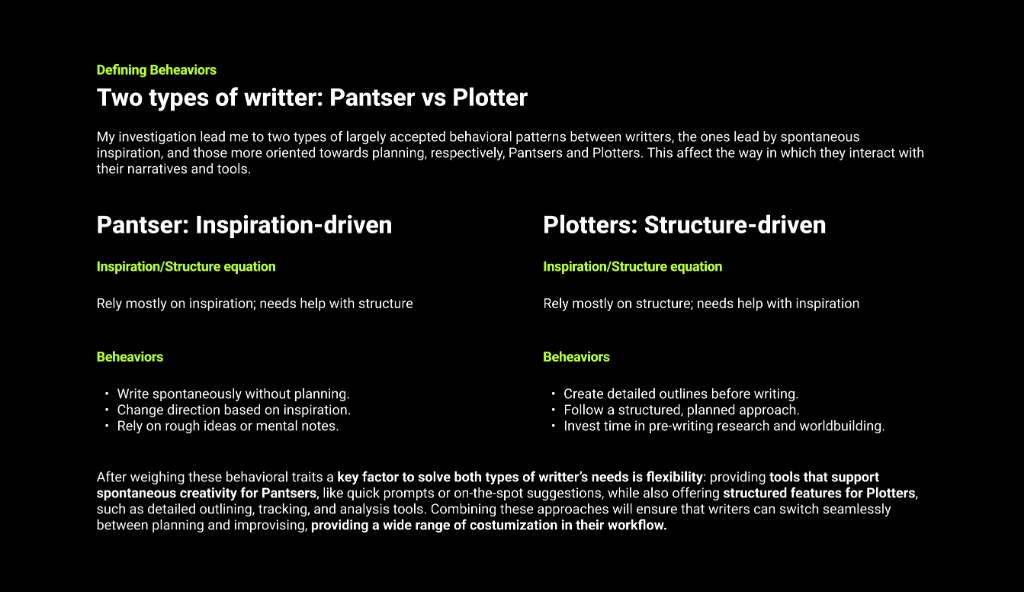
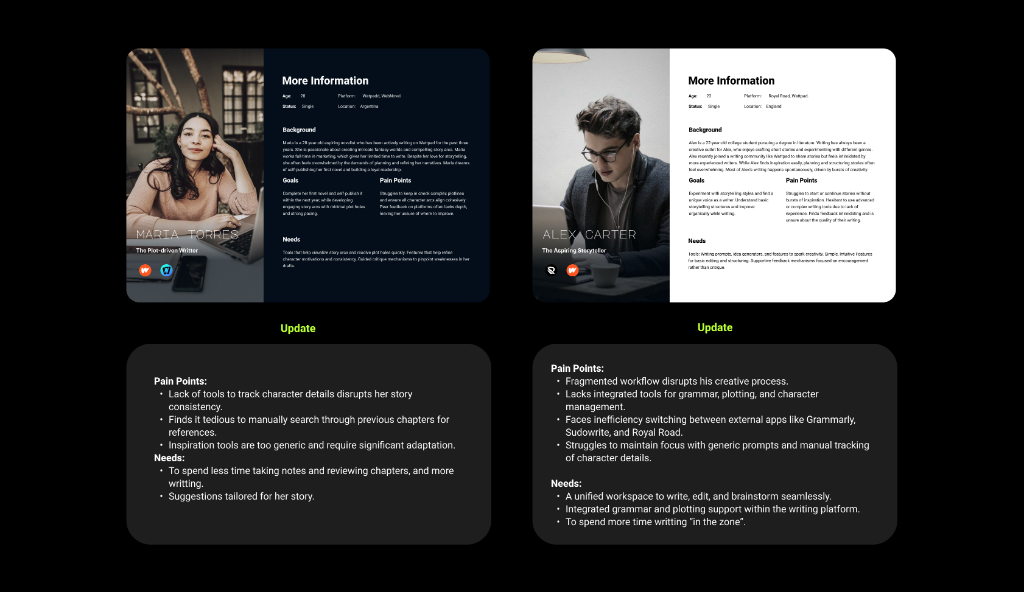
I created two personas representing distinct writing styles: Planners ("Plotters") and Improvisers ("Pantsers"). Understanding their workflows helped shape features that serve both approaches.
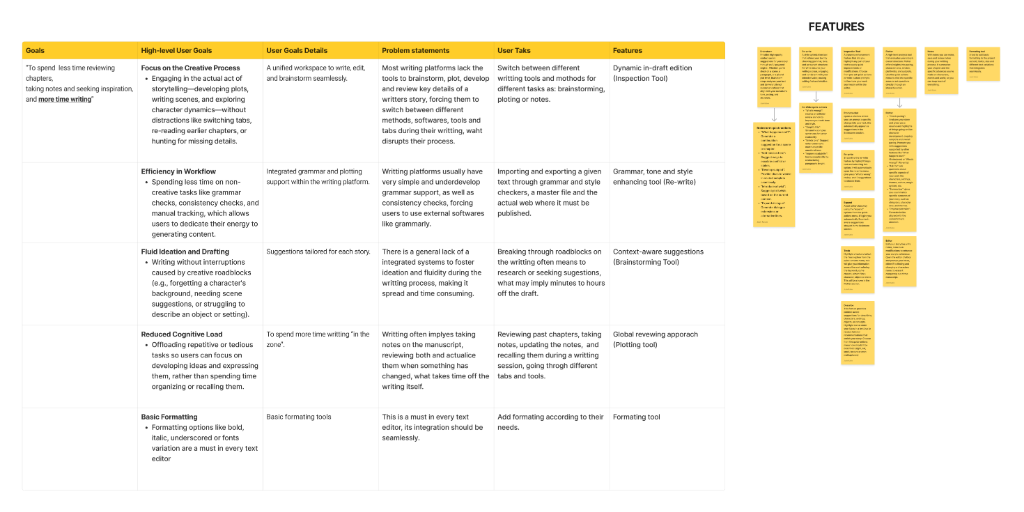
From Needs to Features
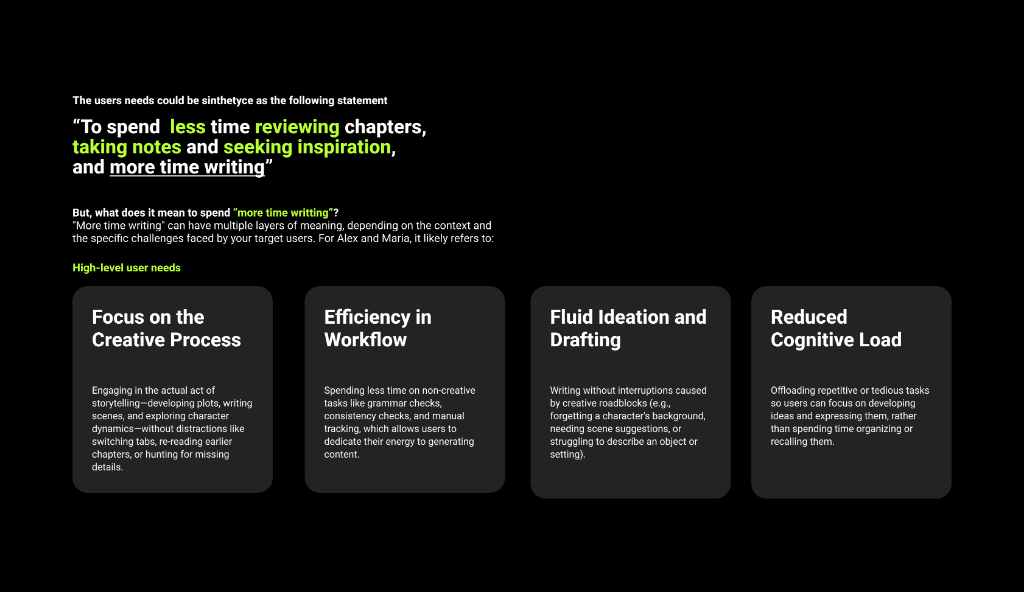
Using insights from research, I mapped user needs directly to features. Each feature addresses a specific pain point and supports clear user tasks—ensuring Teller solves real problems.
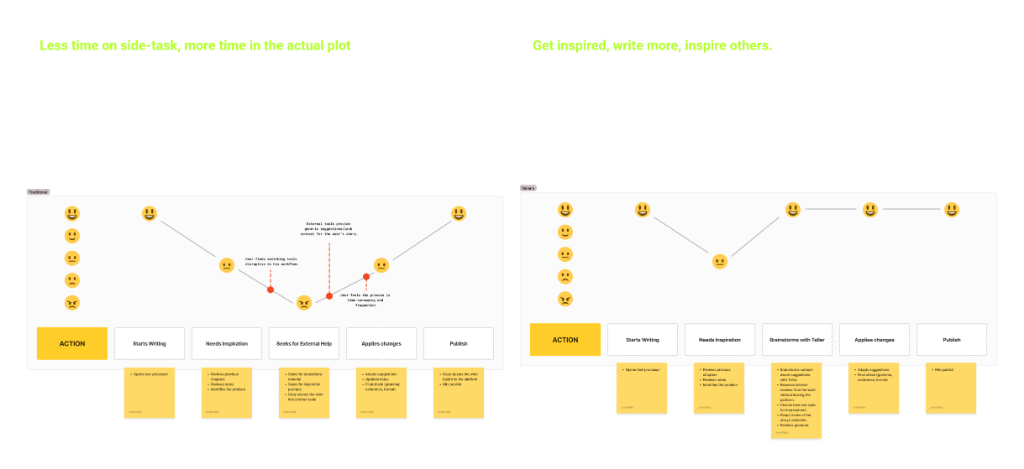
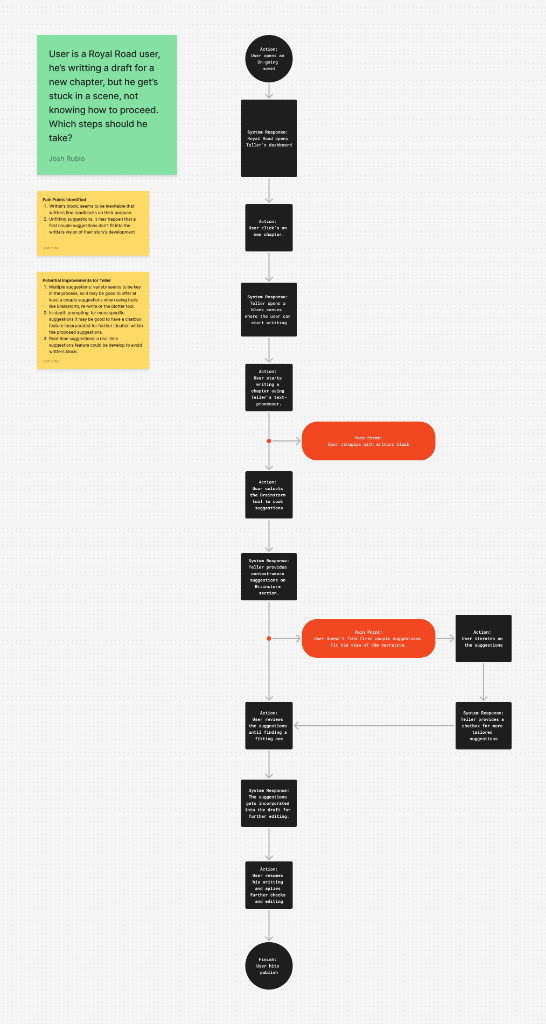
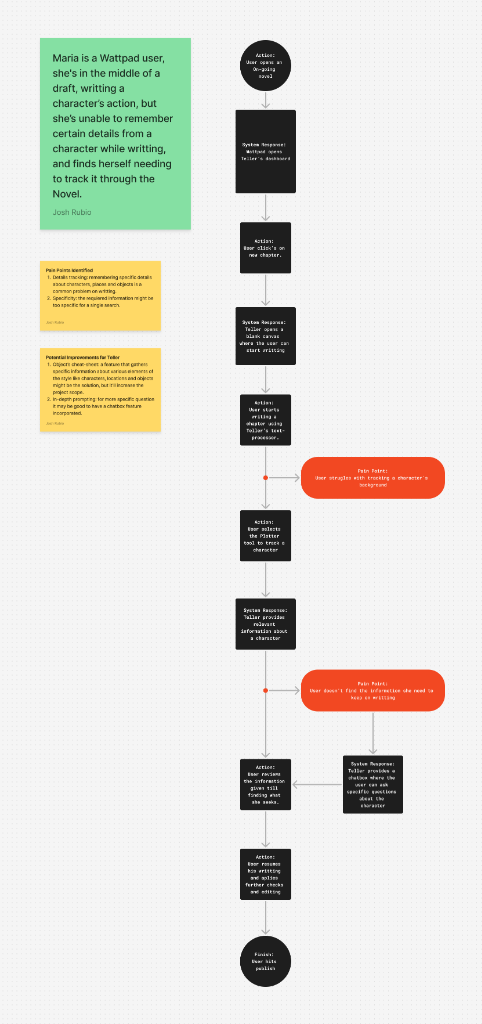
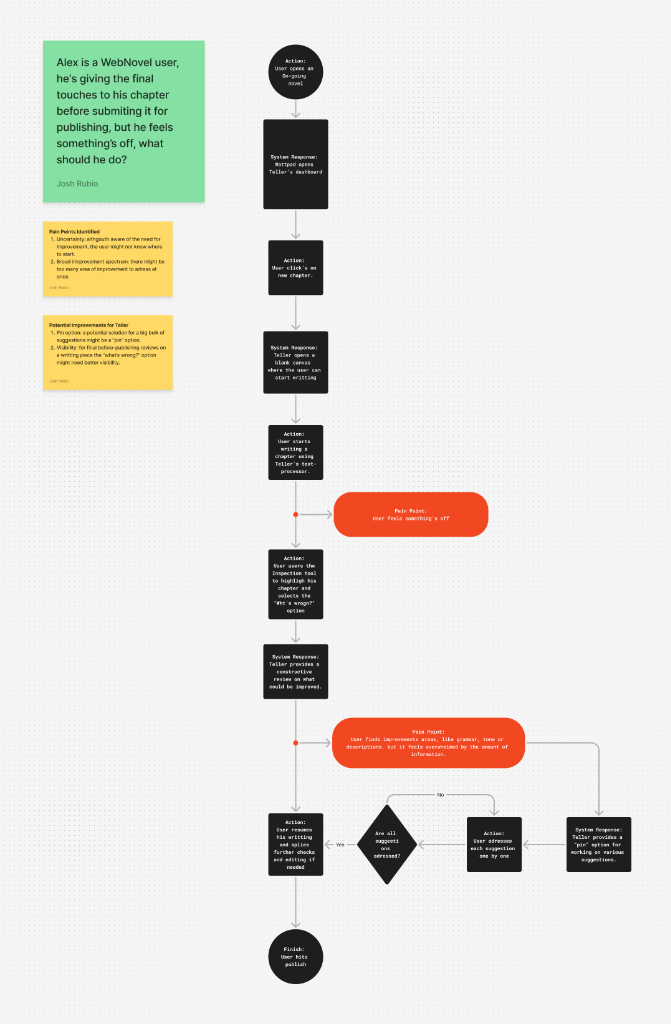
User Journeys
I visualized complete user journeys for both personas, tracking their actions, pain points, and emotional states. This informed where and how Teller should intervene.
6. Crafting the Experience
With research complete, I translated insights into a cohesive visual and functional design—one that feels native to writing platforms while introducing powerful AI capabilities.
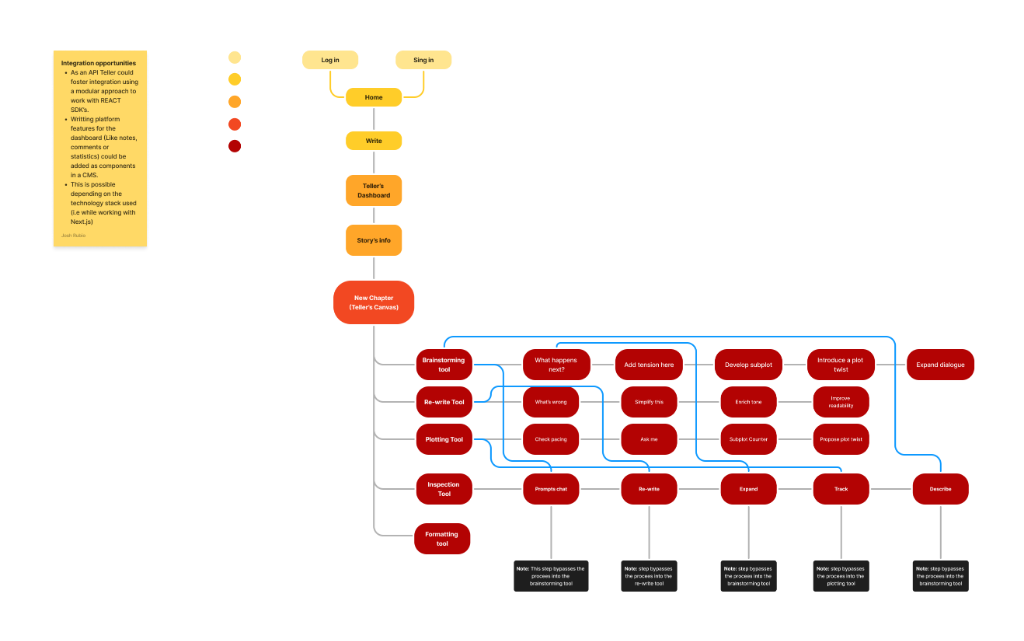
Information Architecture
I structured Teller's navigation to mirror familiar writing workflows on platforms like Wattpad and Royal Road. The goal: make AI assistance feel like a natural extension, not a disruption.
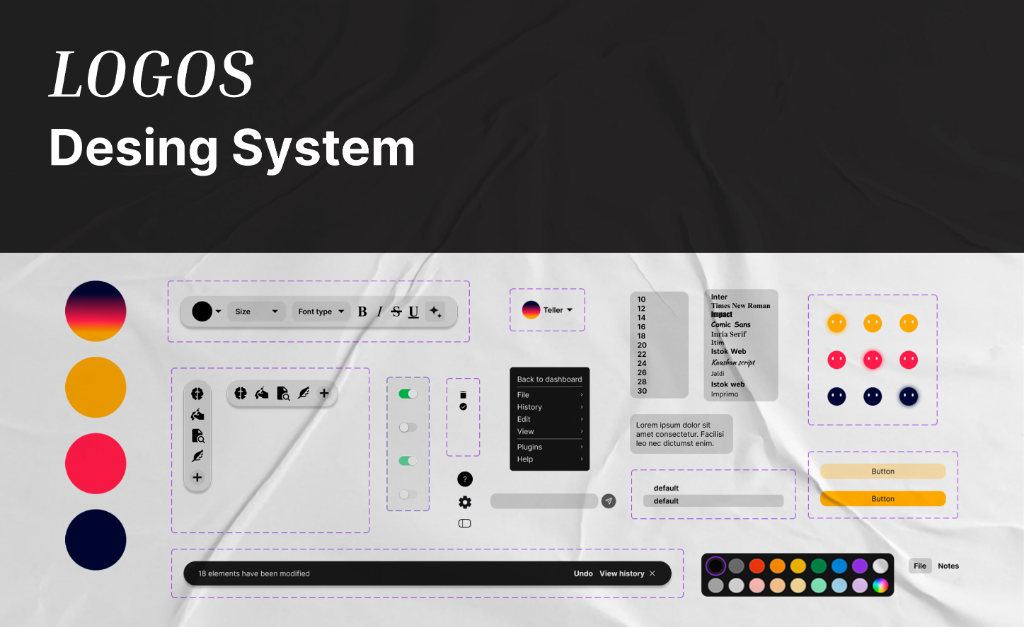
Design System
I built a scalable design system inspired by tools like Notion and ChatGPT. The system balances professional polish with minimal distraction—letting writers stay focused on their stories.
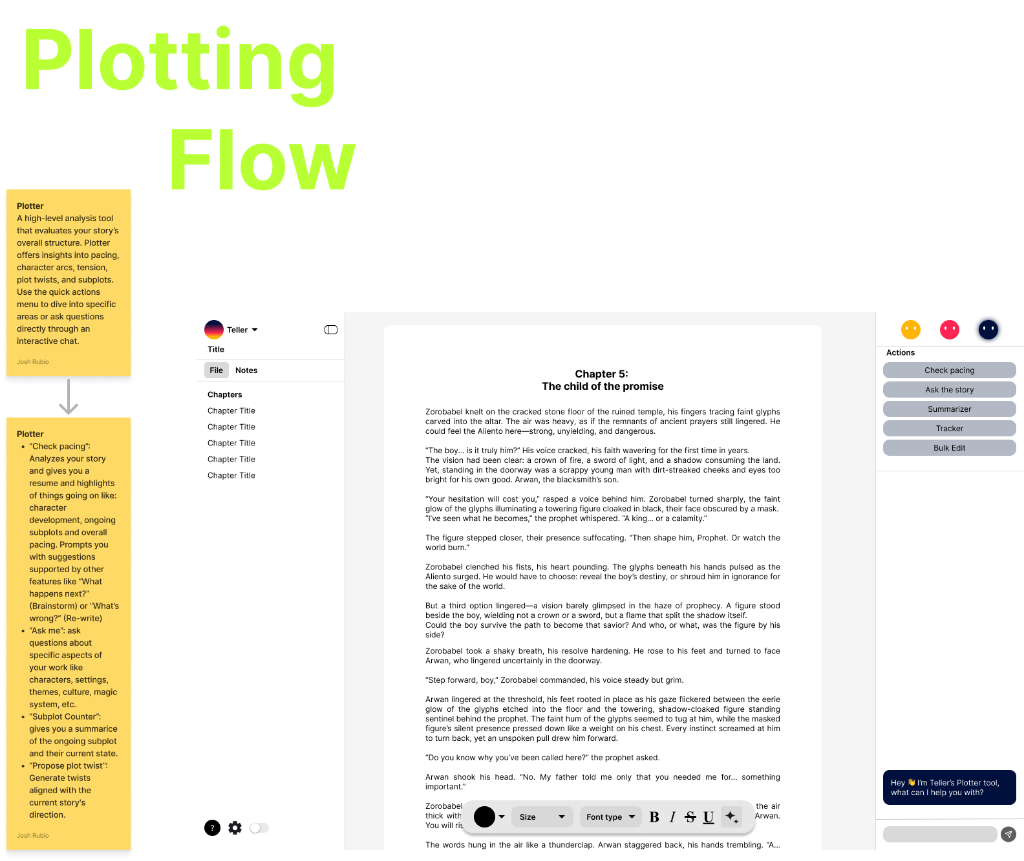
Key Features & Screens
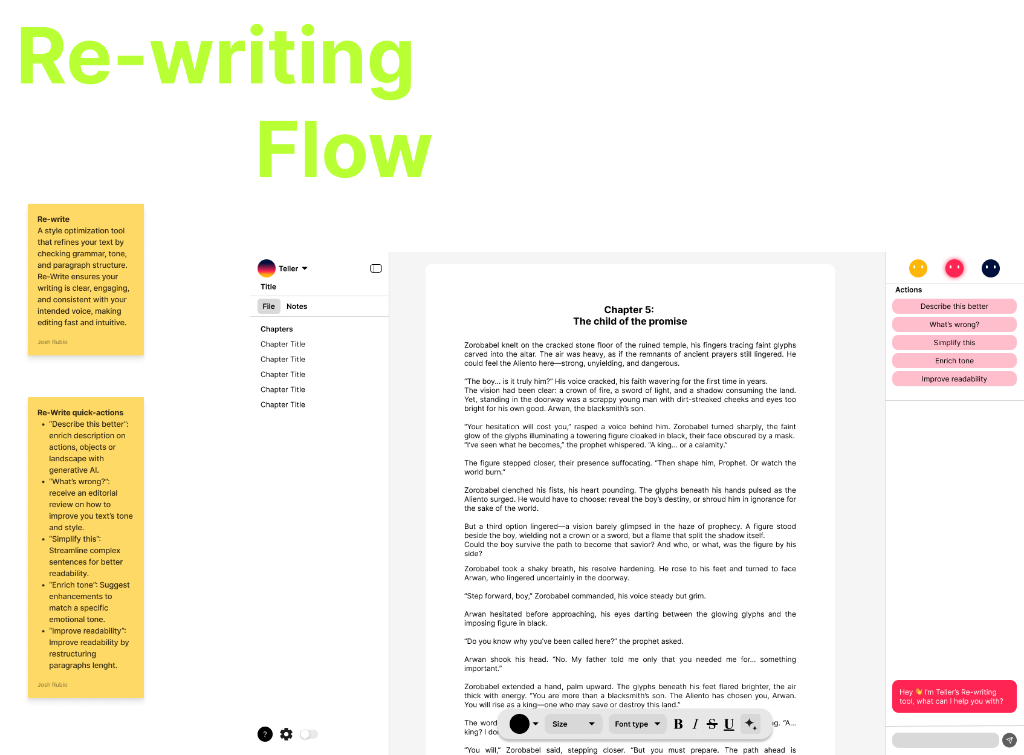
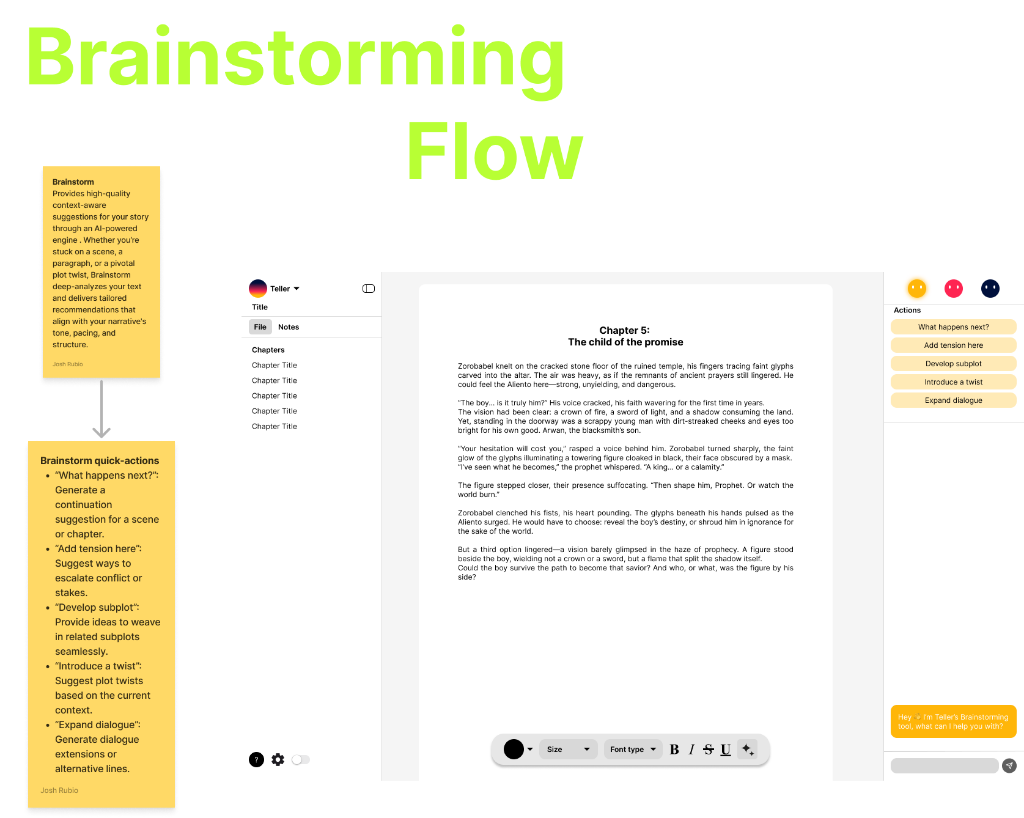
I designed a clean, flexible workspace with an infinite canvas, interactive AI chatbox, and color-coded features. The interface draws from familiar design tools while innovating on AI-assisted writing.
Core design principles: Intuitive navigation • Distraction-free writing • Contextual AI guidance • Visual clarity
💡 Key Takeaways
- User research drives differentiation: The competitive audit revealed that while tools like Grammarly focus on grammar and ProWritingAid on style, there's a gap for narrative-focused AI assistance. Understanding this white space shaped Teller's unique value proposition.
- Planners and improvisers need different support: Discovering the Plotter vs. Pantser distinction was crucial. Rather than forcing one workflow, Teller adapts—offering structure for planners and flexibility for improvisers. This insight came from deep persona development, not assumptions.
- Integration beats disruption: Writers already have established workflows on platforms like Wattpad and Royal Road. Teller succeeds by enhancing their existing experience, not replacing it. Familiarity reduces friction and increases adoption.
- AI needs context to truly help: Generic AI tools miss the nuance of storytelling. By mapping user journeys and understanding when writers struggle (plot consistency, pacing, character development), Teller can intervene at the right moments with the right guidance.
Next steps: User testing with real writers from Wattpad and Royal Road to validate feature priorities and refine the AI interaction model.